
Every machine has a voice.
Learn to identify a vintage typewriter by badge, body, keyboard, carriage, mechanism, serial number, and production clues—then decide whether it belongs on a shelf or under your fingertips.
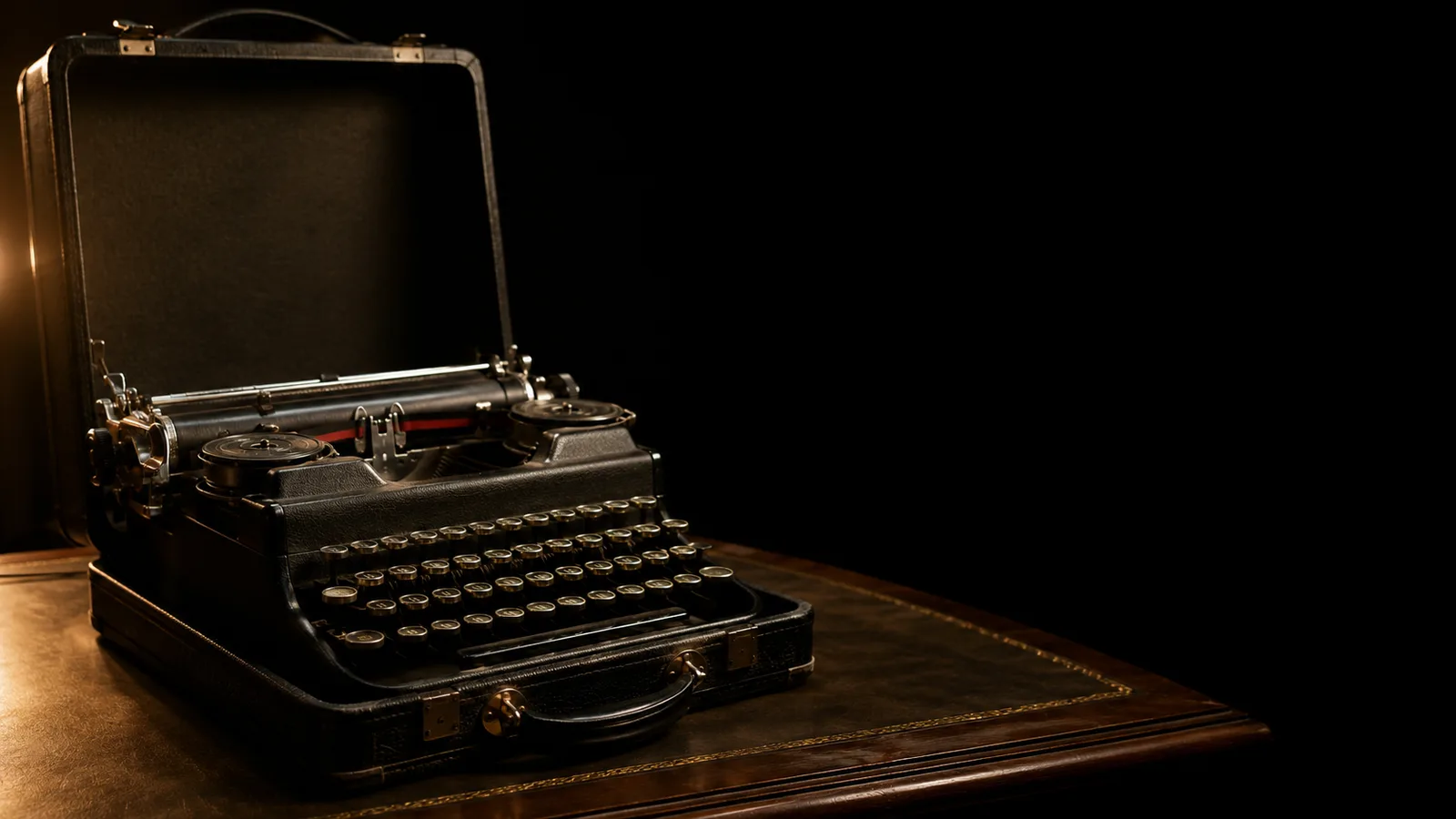
What is sitting on your desk?
Do not begin with color alone. Start with the badge, model name, carriage width, keyboard, shell shape, and whether the mechanism is manual, electric, or electronic.
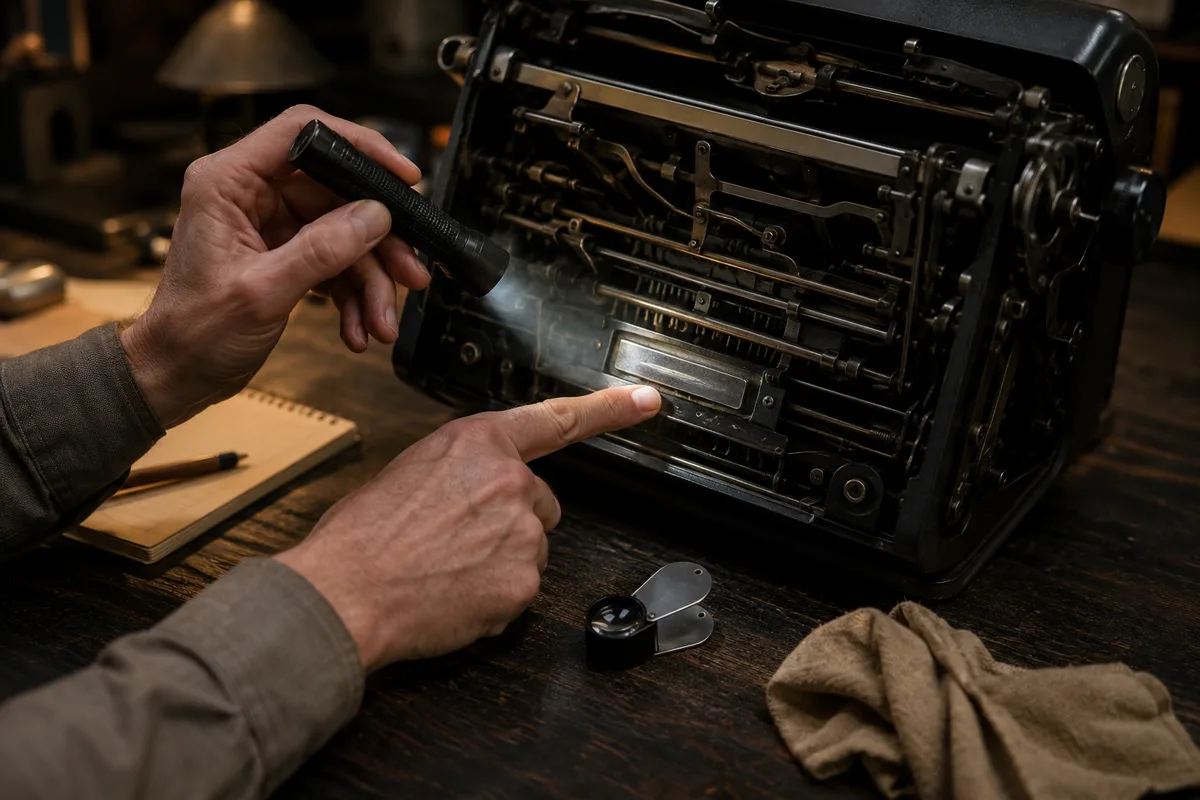
A machine with no model name
Use body style, layout, controls, serial location, and construction clues.
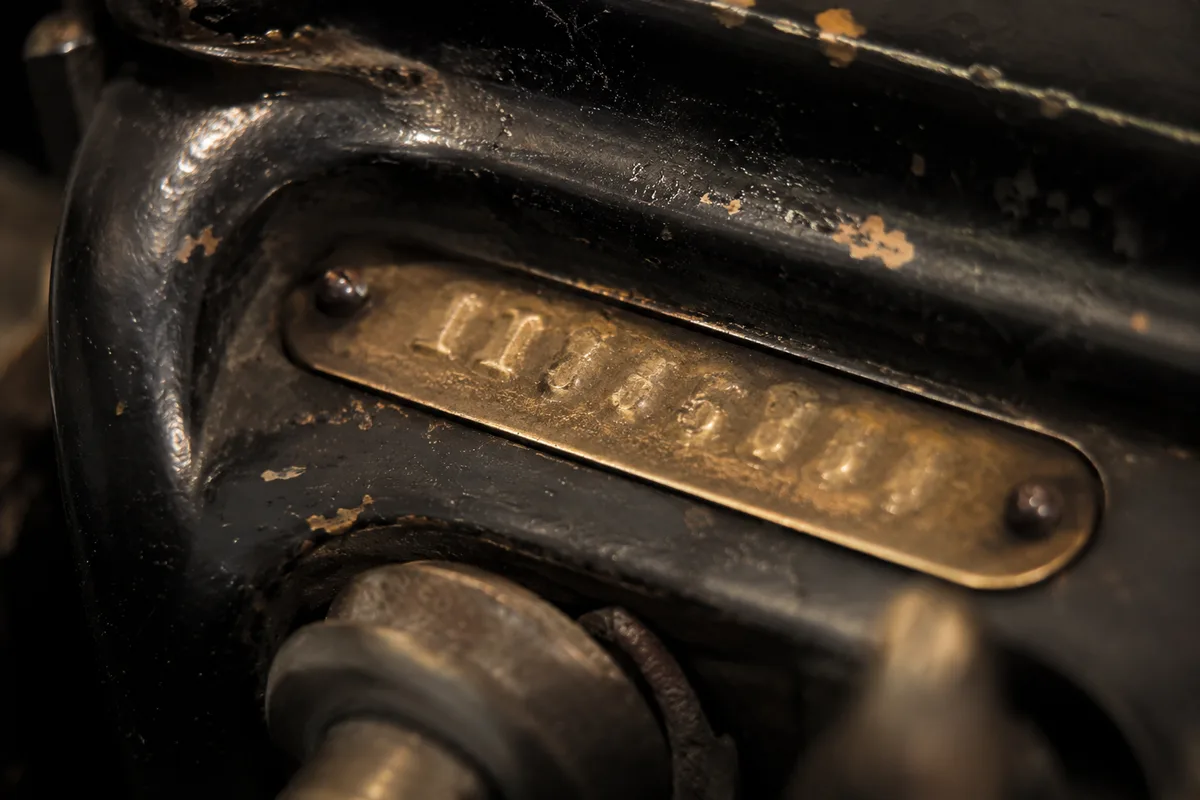
A serial number
Record it exactly, then match the correct brand and model family before dating.
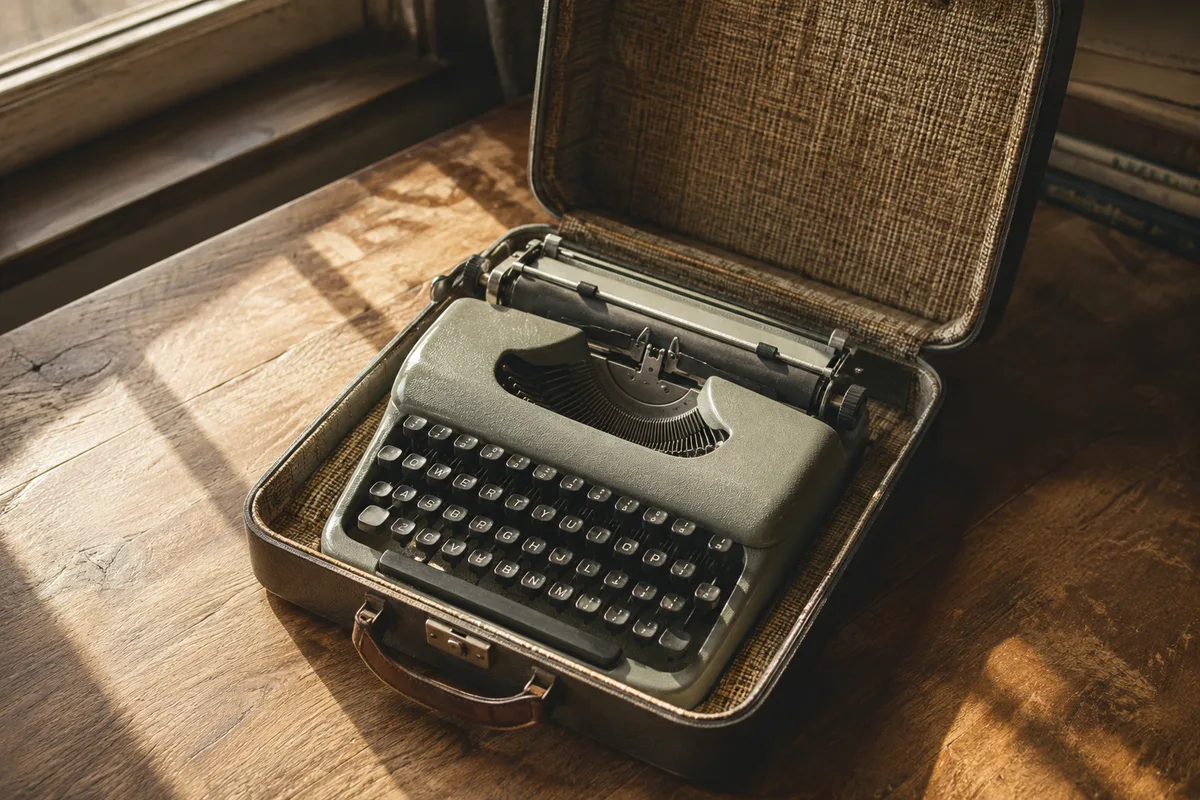
A portable in a case
Compact carriage, carrying case, and a machine designed to travel.
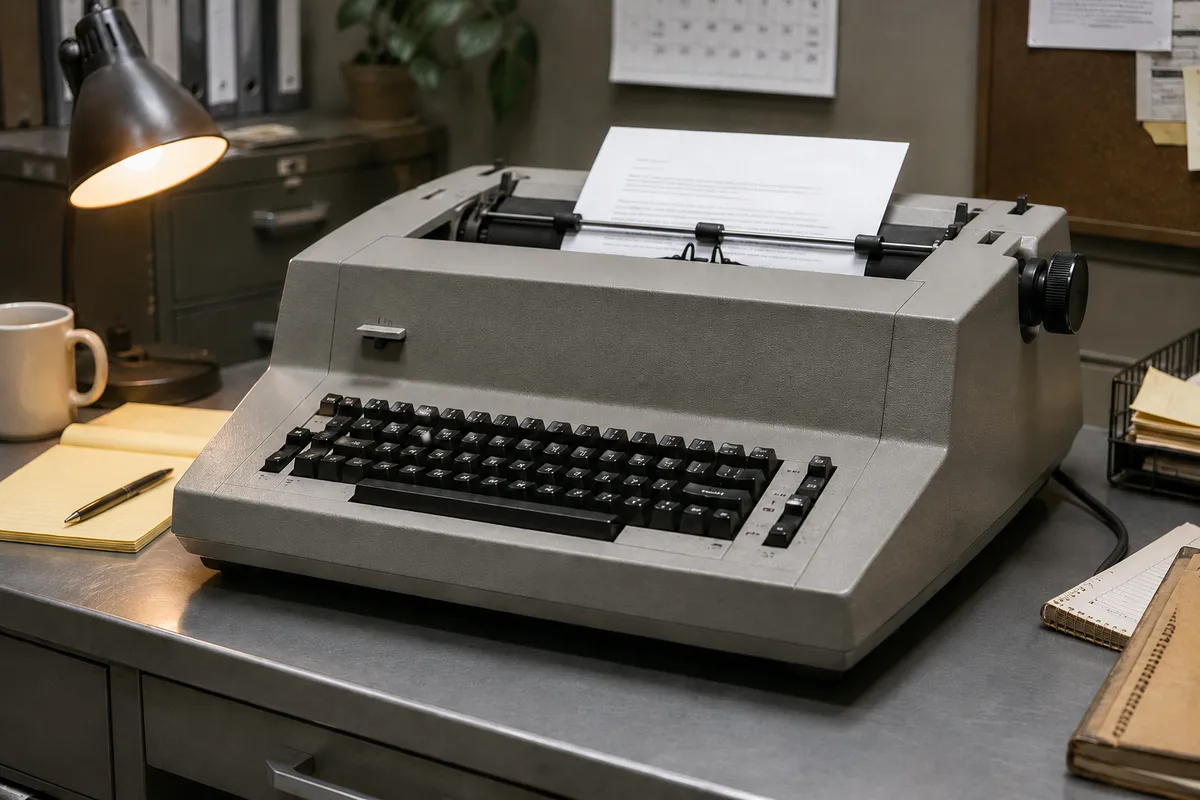
An electric office machine
Power cords, motors, type elements, correction systems, and service needs.
Photograph first. Clean later.
Browse by maker
These brands dominate active vintage-typewriter searches, but model, era, condition, keyboard, and service quality usually matter more than the badge by itself.
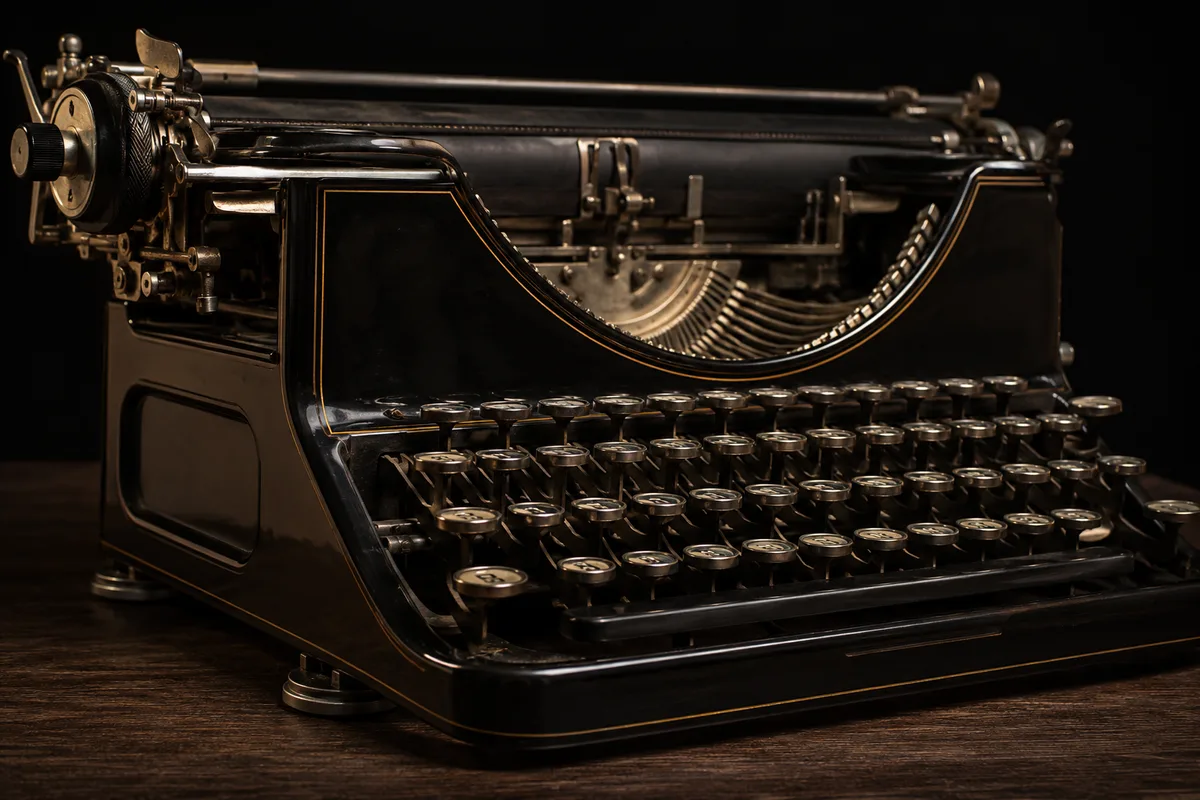
Underwood
Visible-writing standards, portables, and the famous No. 5 lineage.
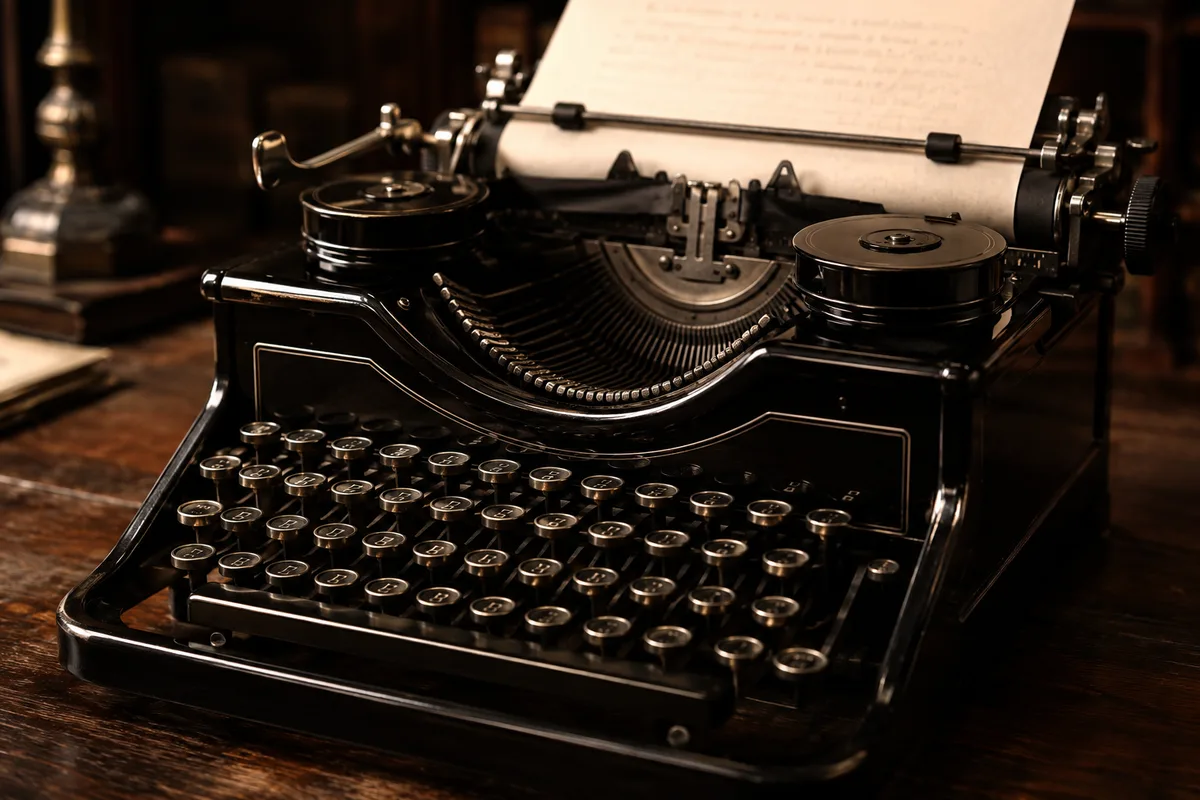
Remington
Early standards, portables, noiseless machines, and long production history.
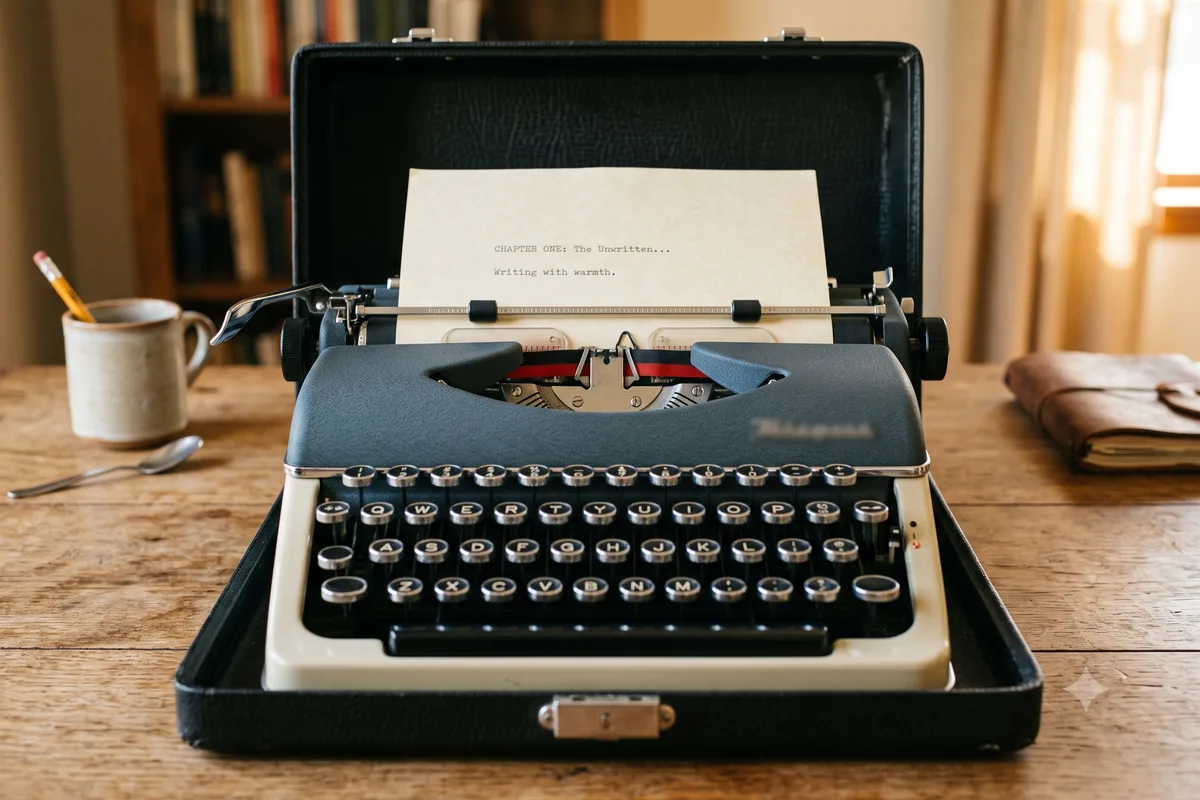
Royal
Standards and popular writer-friendly portables such as the Quiet De Luxe.
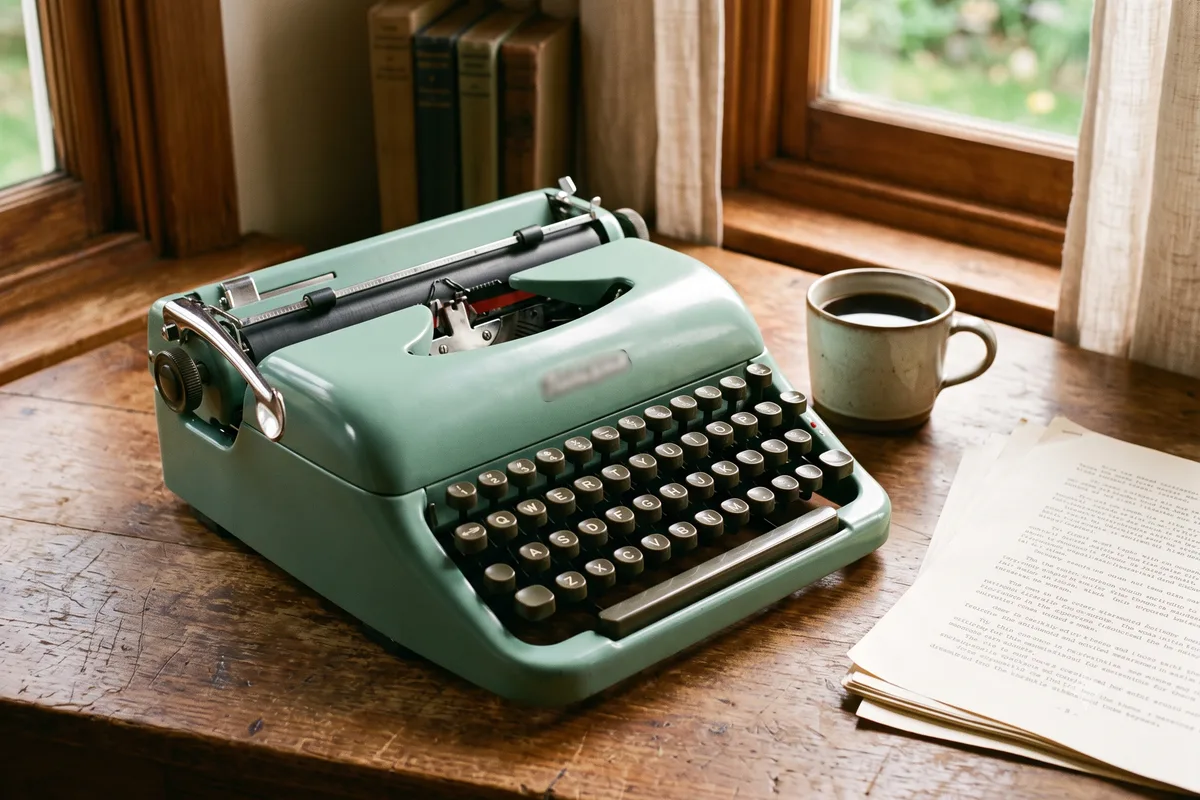
Smith-Corona
Corona folding machines, Silent and Sterling families, and postwar portables.
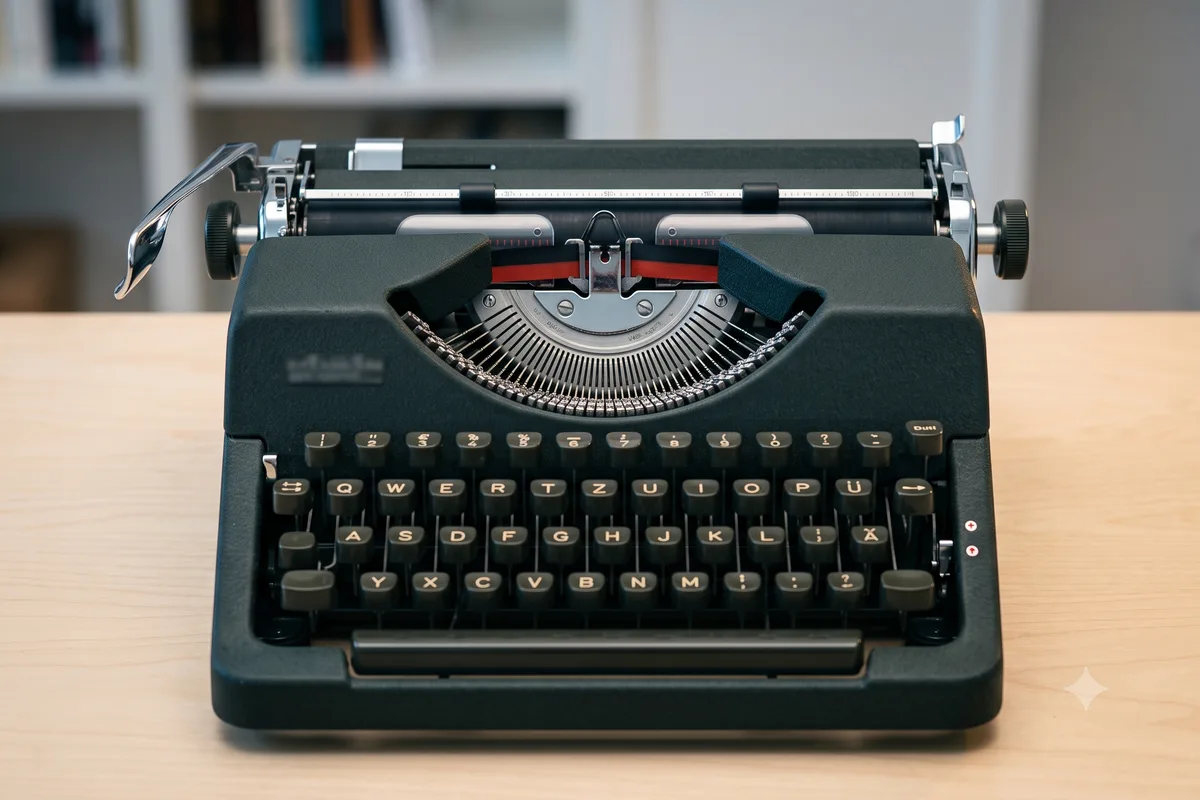
Olympia
German engineering and SM-series portable machines prized by active typists.
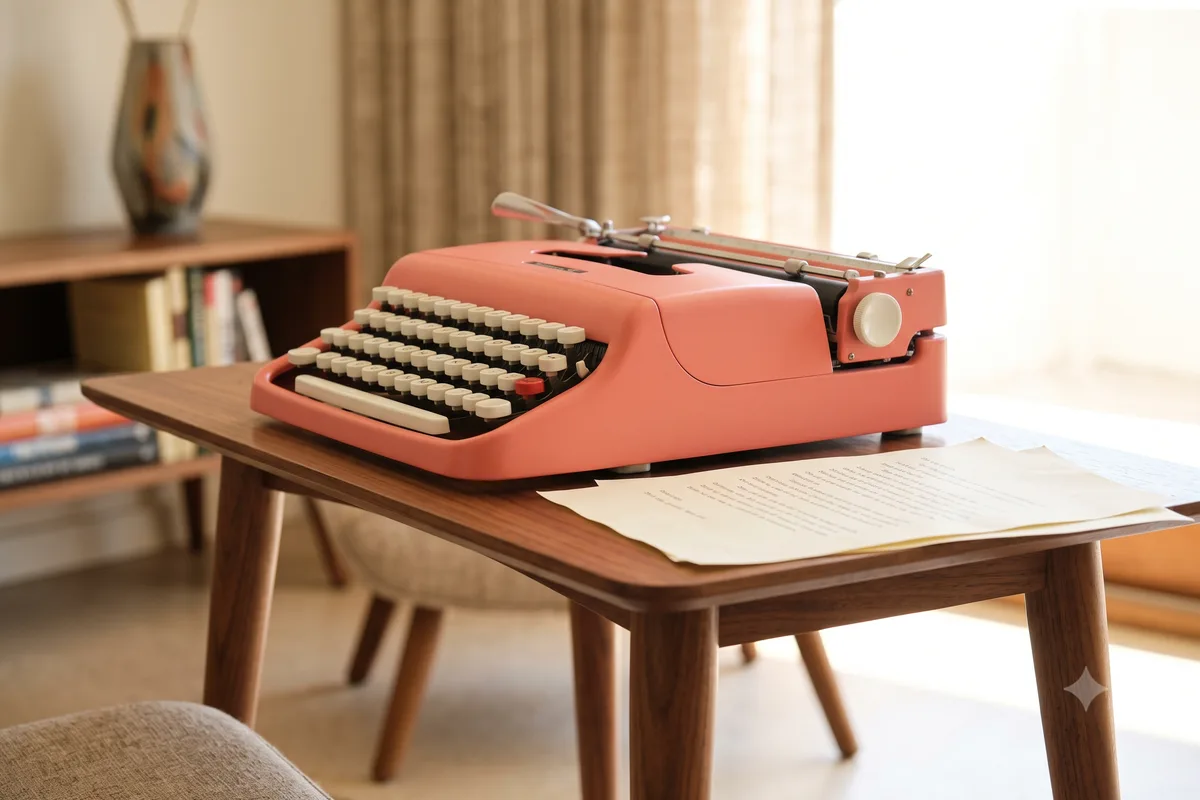
Olivetti
Italian industrial design, Lettera portables, and distinctive mid-century color.
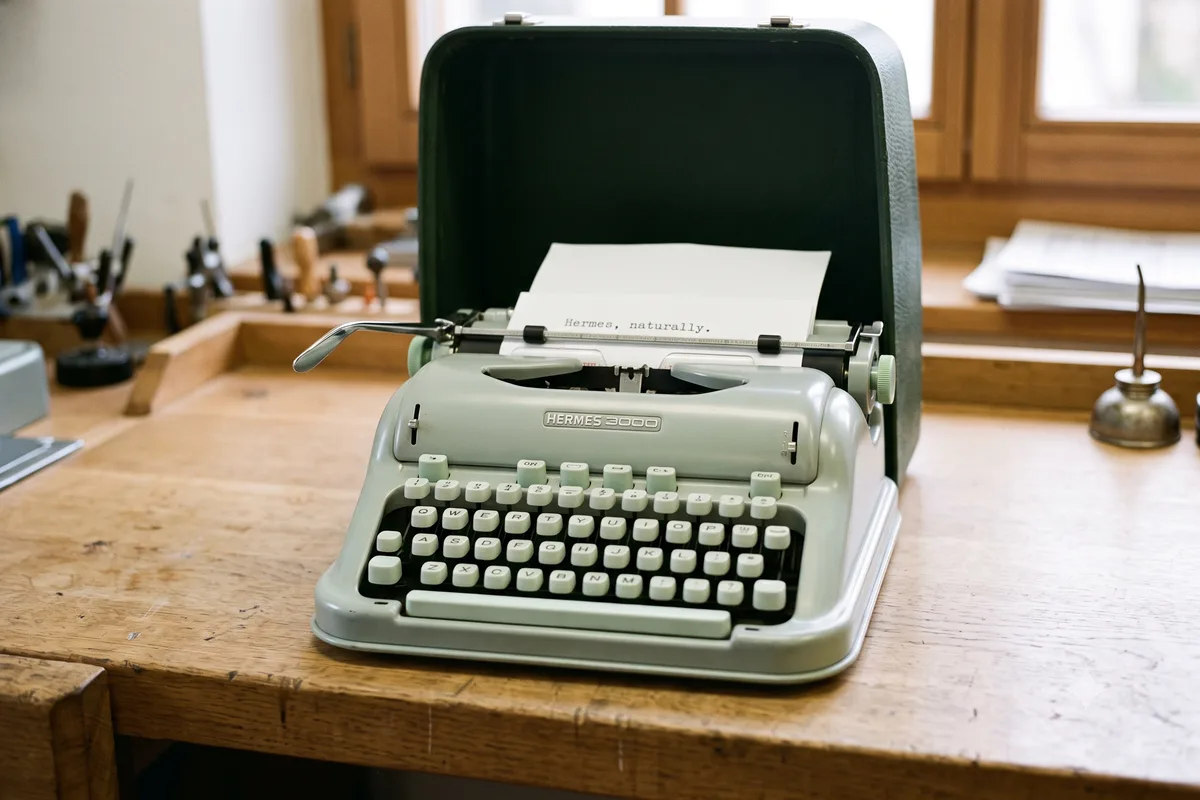
Hermes
Swiss-made portables, especially the highly sought Hermes 3000 family.
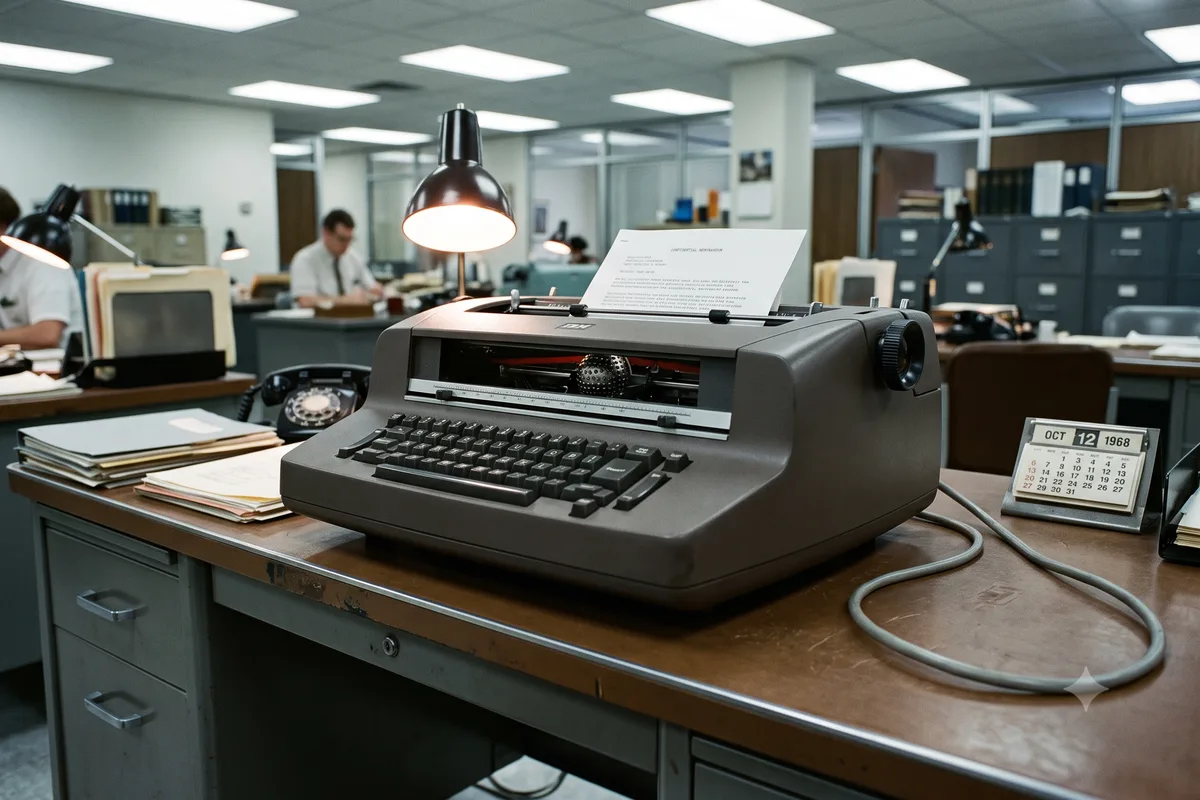
IBM
Electrics and the Selectric system with interchangeable type elements.
Brother
Accessible postwar portables, many sold under additional store-brand names.
Search by the words sellers actually use.
Add the maker, model, color, keyboard layout, case, working status, or service history. The search opens eBay’s collectible-typewriter category with your phrase.
Affiliate disclosure: qualifying purchases may earn this site a commission at no extra cost to you.
“Working” is not a complete condition report.
A machine can put ink on paper and still have a hard platen, sluggish escapement, uneven alignment, damaged feed rollers, cracked drawband, incorrect ribbon threading, or a carriage that needs attention.
For value, compare like with like: same model family, keyboard, cosmetic state, case, service documentation, shipping quality, and actual typing performance.
Read the value guide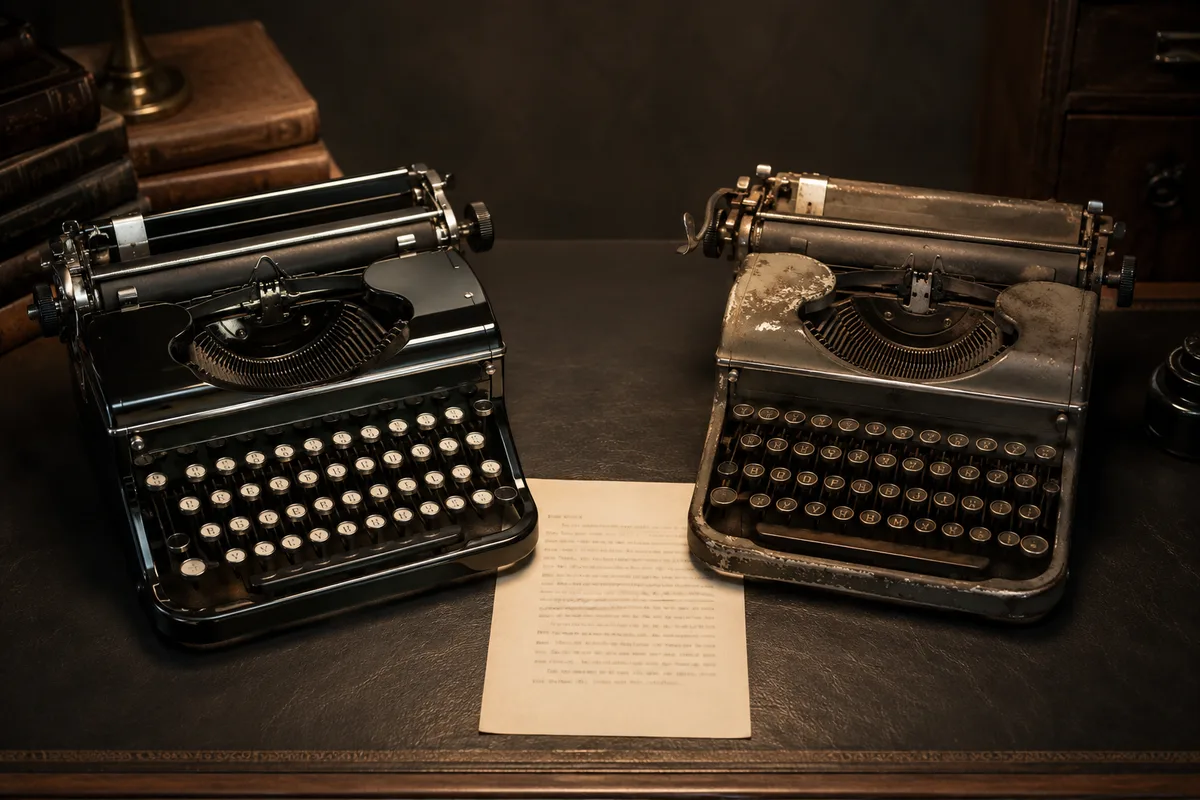
Models people search by name
Underwood No. 5
A landmark visible-writing standard and a central reference point in typewriter history.
Olympia SM3 & SM4
Closely related mid-century portables with strong reputations among active typists.
Olivetti Lettera 22 & 32
Compact Italian portables with serious design credentials and everyday usability.
Hermes 3000
A sought-after Swiss portable where generation, condition, and service matter greatly.
Royal Quiet De Luxe
A long-running portable family with multiple body generations and color variations.
IBM Selectric
The iconic electric system that replaced typebars with a moving type element.

Ask for a fresh typing sample.
A current sample reveals alignment, ribbon advance, feed, skipping, imprint, and whether the seller has actually used the machine. A video of the carriage, shift, spacebar, backspace, and return lever is even better.
Use the pre-purchase testPractical collector reading
How to photograph a typewriter
The views that expose model, condition, keyboard, serial, and shipping concerns.
Read guide →Your first vintage typewriter
Choose a usable machine before chasing rarity, color, or celebrity association.
Read guide →Restore or leave original?
Separate careful mechanical service from irreversible cosmetic work.
Read guide →