
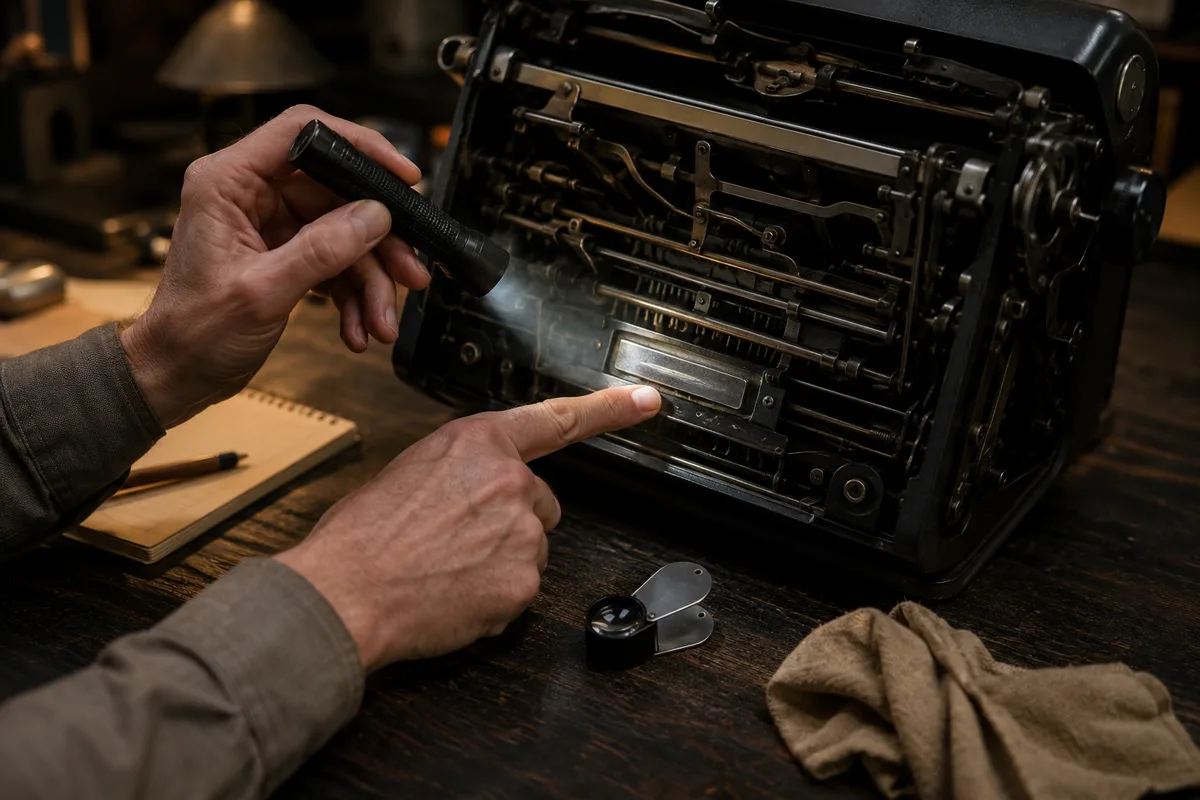
Start dry
Use a soft brush, low-force air, and a vacuum held nearby rather than pressed against delicate parts. Protect decals and key legends.
Clean the type
Type slugs can be cleaned carefully with an appropriate brush and minimal solvent used in a ventilated area. Keep solvent away from painted surfaces, rubber, and plastic unless compatibility is known.
Lubricate only where specified
Many typewriter problems come from dirt and old lubricant, not lack of oil. Excess oil attracts dust and migrates where it does not belong.
Know when to stop
Escapement faults, broken drawbands, frozen shift mechanisms, electrical problems, hardened feed rollers, and alignment work are strong reasons to use an experienced technician.
Compare live listings
Open a focused eBay search and compare condition, completeness, seller testing, shipping, and sold history before deciding.
Search eBay listingsAffiliate link. A qualifying purchase may earn this site a commission at no extra cost to you.
Ready to start browsing?
See current Vintage Typewriter listings on eBay →